 ChatGPT
 Claude
 Perplexity
 Google AI
What an AI Agent for Social Media Actually Is (And Why Most Aren't One)
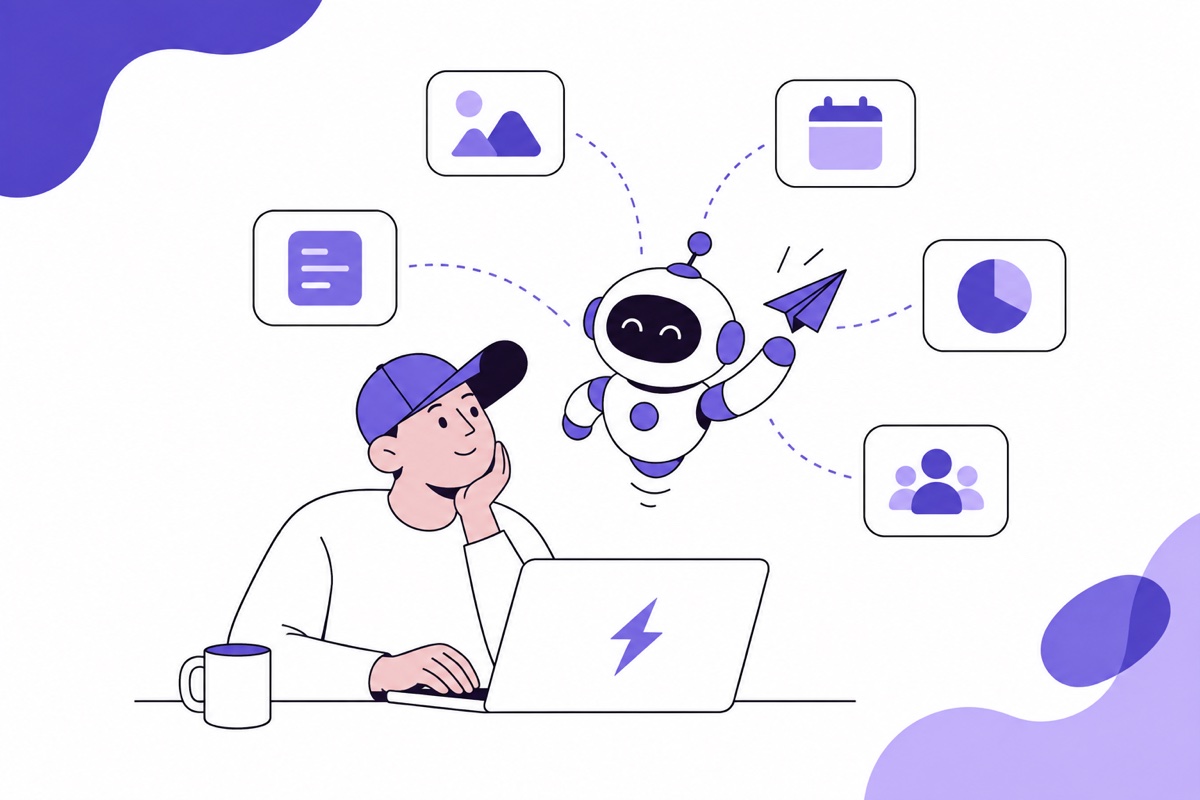
A few weeks ago someone told me "I've got an AI agent running my social media," and my first thought was: no, you don't. You've got a calendar on steroids.
I kept reading anyway. Turned out I wasn't entirely right — but I wasn't entirely wrong either.
A good chunk of what gets sold today as an "AI agent for social media" is, underneath, a text generator bolted to a publish button. It writes the caption, sometimes it makes the image, and then it stops: picking the right account, adapting the message per platform, not breaking anything when you're running more than one client — all of that is still manual work, by hand, in a separate tab. That isn't an agent. That's a copywriting assistant with delusions of grandeur.
So what is an AI agent for social media, really?
The definition worth using is more boring than the marketing promises: an AI agent for social media is a system that researches, drafts, decides and publishes without you approving every single step — but that still lets you review before anything goes live. The "decides and publishes" part is what separates a real agent from a content generator with a fancy name.
Which means the right question isn't "which AI writes best?" (you've already got ChatGPT, Claude, Gemini for that — pick whichever you like). The right question is: once that content exists, does it know where it's supposed to go?
The bottleneck isn't creating content. It's connecting it.
I confirmed this doing the boring work: checking what people actually search for before writing about it, rather than guessing. Scheduling social posts pulls real, sustained interest — this isn't an invented niche. And when the search gets more specific, toward AI agents for social media, the same complaint shows up over and over in Reddit threads, forums, YouTube comments: generating content stopped being the problem. The problem is running five client accounts without accidentally pairing a Portuguese caption with an account that only ever posts in Spanish.
Put differently: AI already solved the creative half. Nobody quite finished solving the logistics.
Why the English-language version of this market looks different
Here's the part that surprised me when I looked closely. Search this in English and you land in a crowded room — a dozen players fighting over the same handful of keywords, with Google increasingly answering the question directly in the results page so nobody clicks through to anyone. Search the same thing in Spanish or Portuguese and you get a mix of generic guides translated from English and a handful of tools. Not empty — there are regional players worth knowing about — but nothing like the pile-up on the English side.
That gap isn't an accident. Most "agentic" social tools were built with the English-speaking market in mind. Translating the interface isn't the same as understanding that a community manager in Bogotá runs six different client accounts from a phone, between meetings, and that their problem isn't a shortage of ideas — it's operational chaos.
Worth saying plainly: this is the same problem in any language. The Spanish- and Portuguese-speaking version of it just has fewer people building for it.
What this looks like in practice (with MCP, not promises)
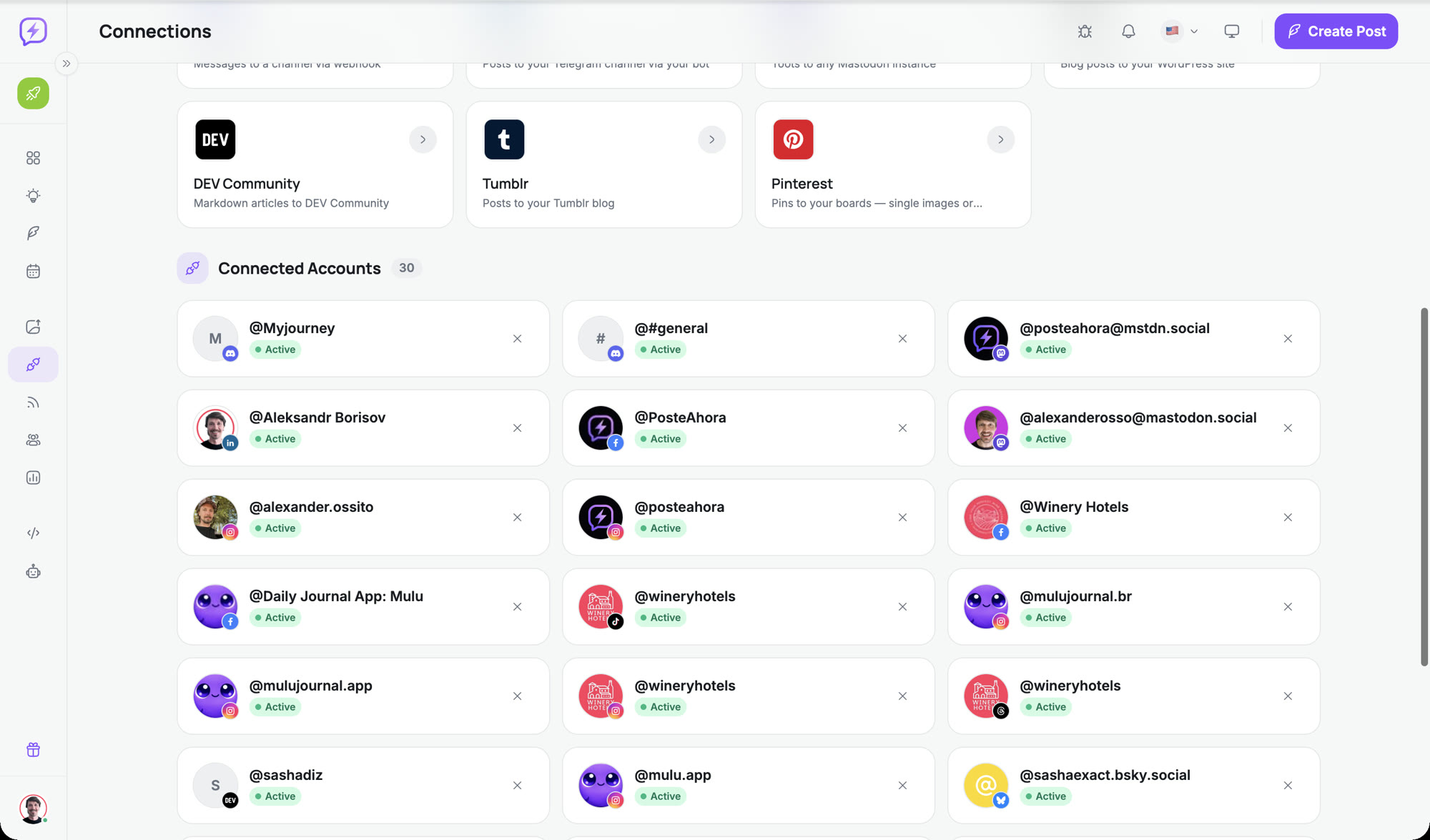
This is where I'd rather show than promise. PosteAhora exposes its full functionality over MCP (Model Context Protocol) — the same standard Claude, ChatGPT and other agents use to reach external tools — so whatever agent you're already using can operate on your real accounts without you writing a custom integration.
Here's how the "connecting" problem actually gets solved:
- A backlog with states, before anything is a real post.
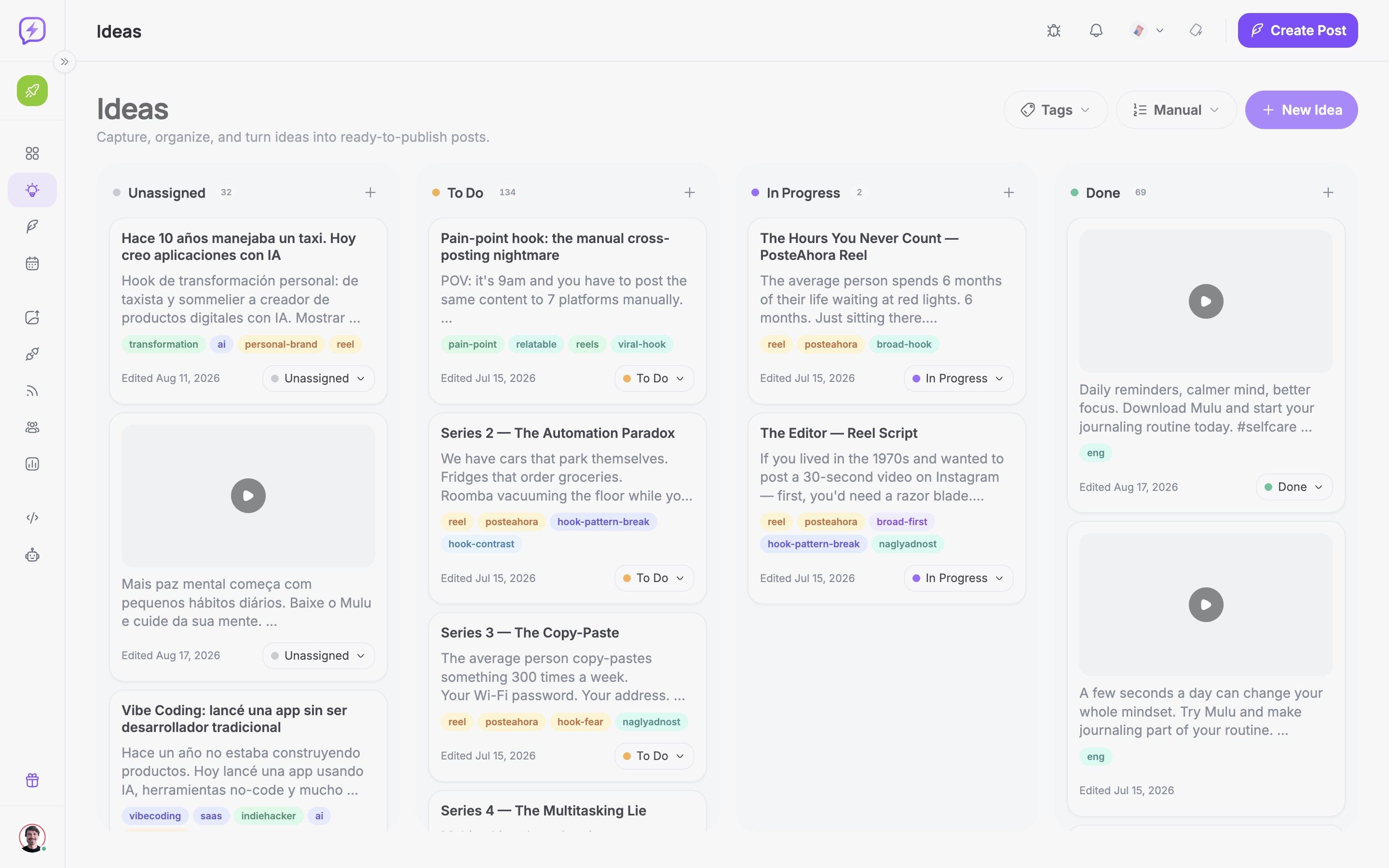
create_idea/list_ideas/update_ideaform a kanban board where the agent drops each content variation — caption, media, notes — and moves it across columns as it gets generated, reviewed and approved. There's no accidental publishing because there's no automatic publishing until someone decides there is. - One call, every account.
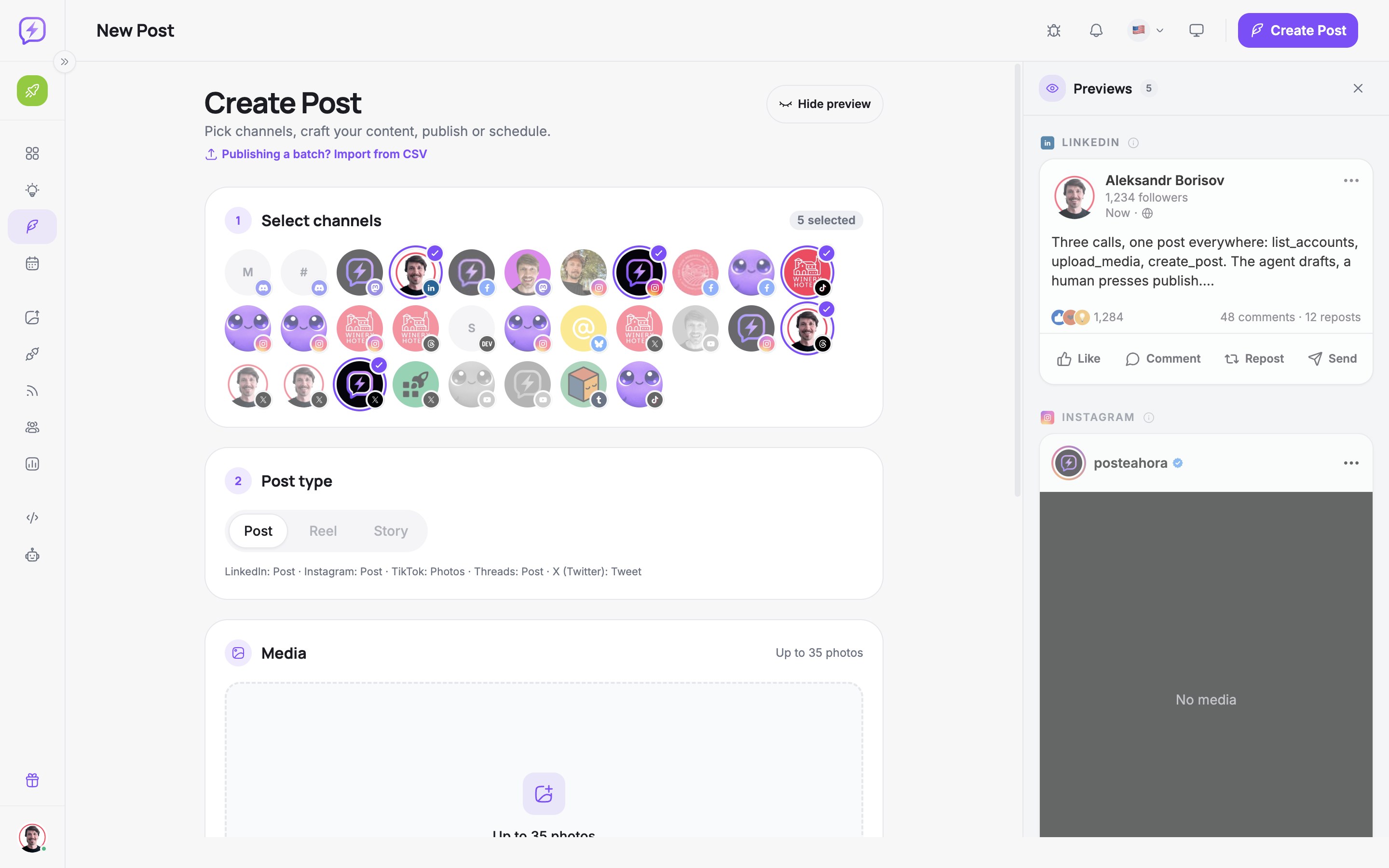
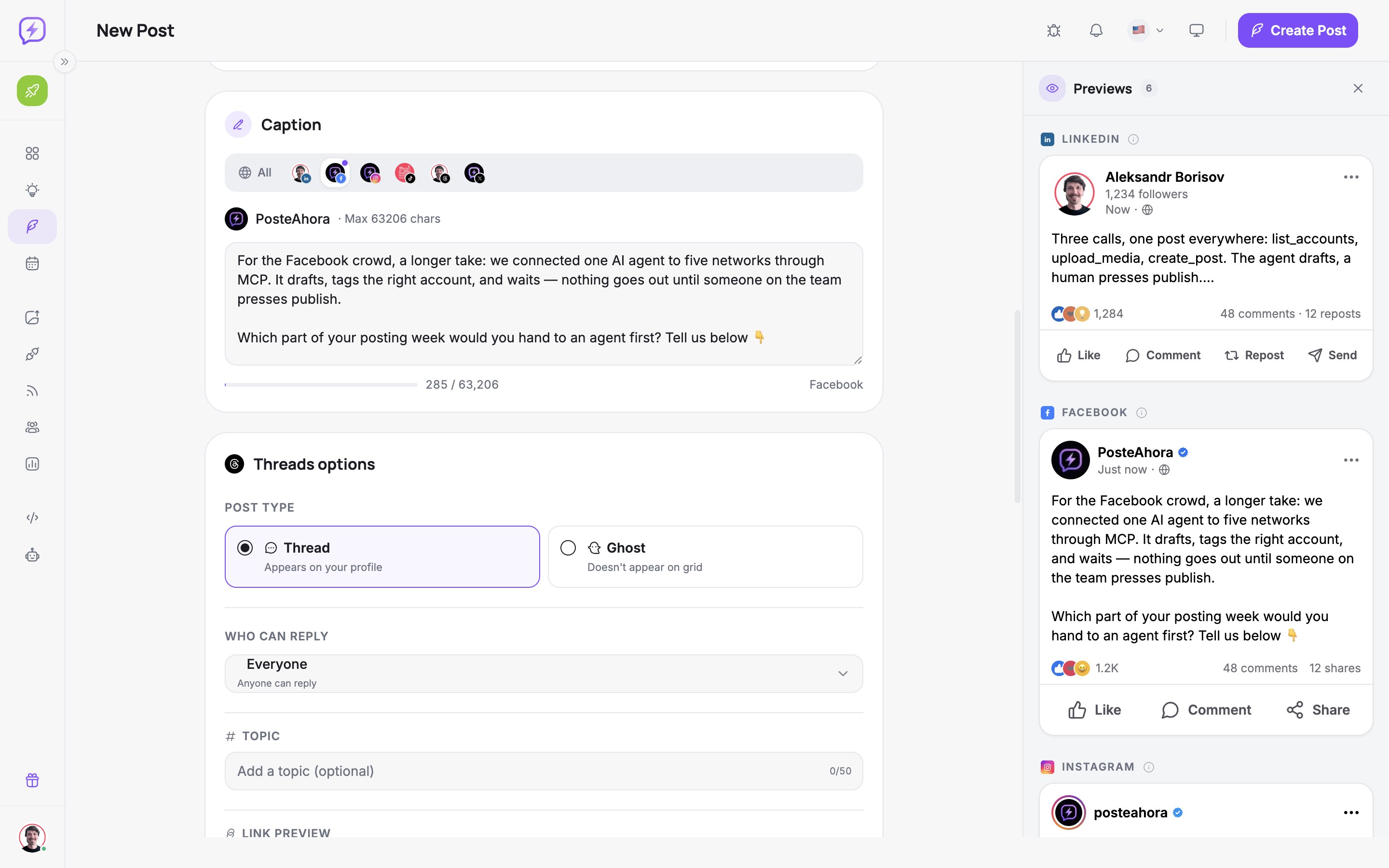
create_postandschedule_posttake anaccountMappingsarray — one entry per connected account — so an agent can fan the same content across every account it manages in a single instruction, and useplatformCaptionsto override the text account by account when the language or tone has to change (the classic case: same campaign, Spanish caption on one account, Portuguese on another). - Nothing publishes on its own, by default.
create_ideaonly writes to the backlog — it publishes nothing, not even by accident — and moves the idea through kanban columns (unassigned,todo,in_progress,done) as it progresses.create_postandschedule_poststart indraftunless you explicitly passstatus: "published". The agent generates and organizes; a person still presses publish. That's not a limitation — it's what makes trusting an agent reasonable in the first place. - The data loop, closed.
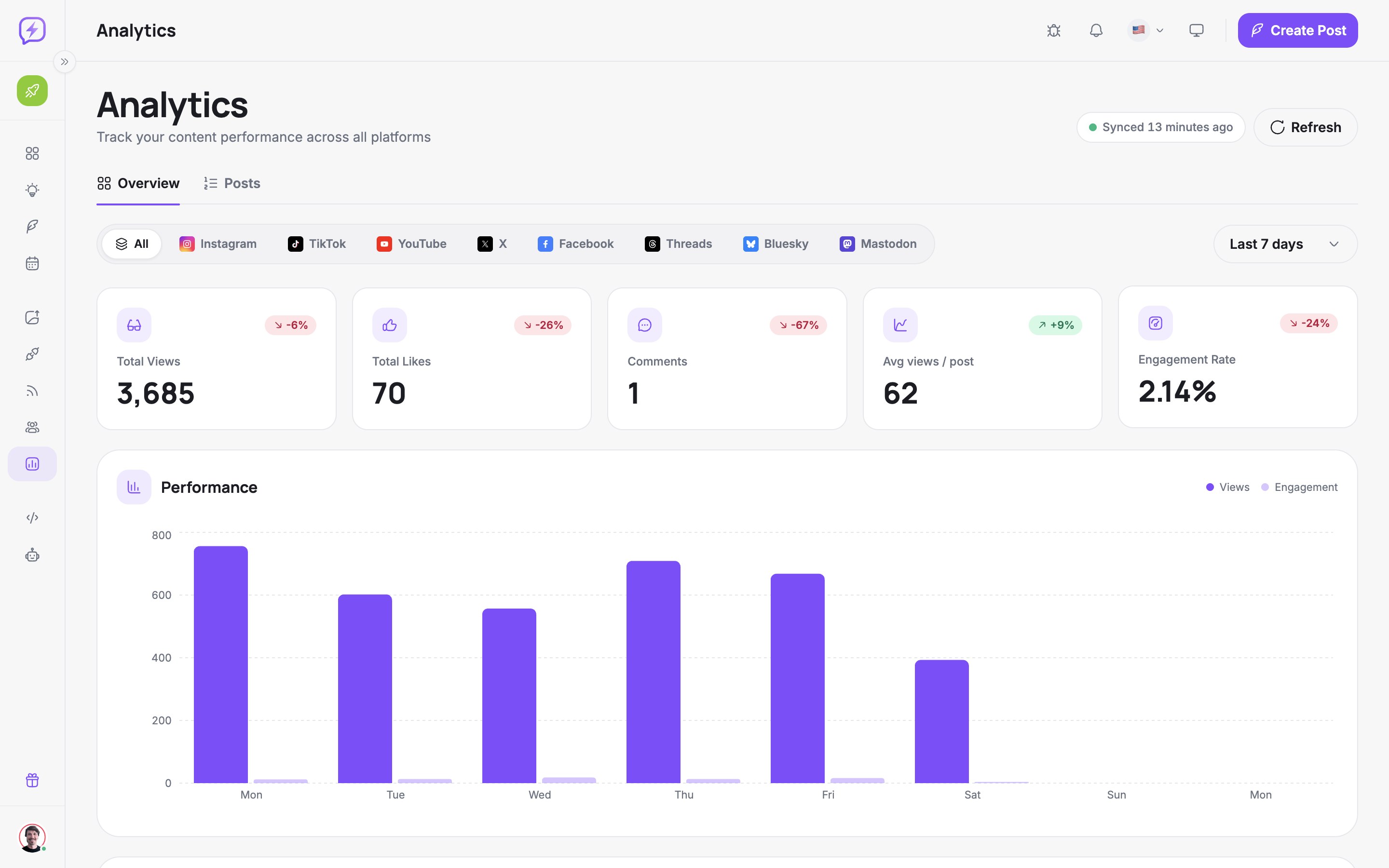
get_analyticsreturns views, likes, comments, shares and reach per platform, synced hourly, so the same agent that published can go read what worked — and adjust the next batch with real numbers instead of instinct.
None of this replaces the community manager. It takes off their plate the part nobody enjoys: the logistics of who publishes what, where, and in which language.
What if you already built something with n8n?
If you came here from wiring your own flows in n8n or Make, connecting AI models to each social network's API separately — first, respect: that's exactly the problem that led to all this. But it's also the kind of solution that breaks every time Meta moves an endpoint or TikTok updates its permissions, and that leaves you maintaining a separate integration per platform. An MCP server built for this doesn't compete with your automation — it sits underneath it, as the connection layer you no longer have to maintain yourself.
So which AI is best for social media?
The most repeated question, and the honest answer is that it depends which half of the problem you're solving. For drafting and generating ideas, any of the big conversational models will do — there's no magically superior AI for writing a caption, despite what fifty articles with "the 15 best" in the title will tell you. For the other half — the one that decides, distributes and learns — what matters isn't which model produced the text, but whether the system around it knows which account it goes to, in which language, and whether a human sees it before it ships.
That's the question worth asking any tool that calls itself an agent, before believing it.
What to take away from this
If you run more than one account, the real bottleneck is almost never creativity — it's the operational chaos of coordinating who publishes what, where, and when. Treat every piece of content as something with a state (idea, review, approved, published), not as a loose file. And if you're evaluating an AI agent for your social accounts, ask it less about the quality of the text it generates and more about how it connects to the real accounts you already have.
If you'd rather try it than keep reading about it, PosteAhora connects your accounts once and lets any AI agent — yours, or one you wire up over MCP — research, draft and publish to Instagram, TikTok, X, LinkedIn and the rest, always with review before anything goes live.