How to Grow an App From 20,000 to 400,000 Users Without Ads: ReciMe's Multi-Account TikTok Playbook
Short answer: you can grow an app to hundreds of thousands of users with no ad budget, and the recipe app ReciMe is a documented case of it — 20,000 to over 400,000 users in twelve months, which its co-founder attributes to two things: word of mouth and TikTok. The part worth copying isn't "post on TikTok". It's that the TikTok presence was spread across several accounts rather than one, and that the product itself was gutted and rebuilt around a single action people wanted to share before any of the posting worked. Distribution and product were solved together, not in sequence.
Most "we grew with no ad spend" stories fall apart when you ask what they actually did.
This one doesn't, which is why I kept reading.
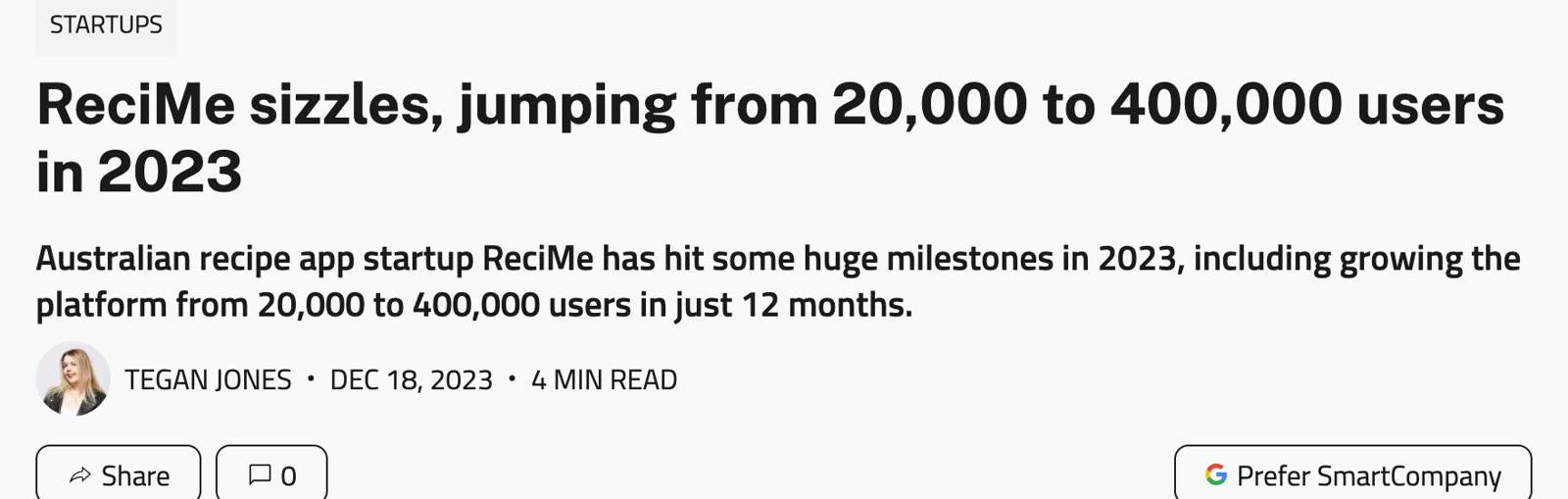
Australian recipe app ReciMe started as a lockdown project for sisters Christine and Ivy Nguyen and their friend Will Kent, launched late 2021, and in 2023 went from 20,000 users to more than 400,000 — SmartCompany reported the twentyfold jump that December, with Christine Nguyen naming the two drivers herself. Eighteen months later the team had moved to New York and raised a $1.5 million seed round with Marissa Mayer among the investors.
No ad budget in either story. That's the interesting part, and it's also the part everyone summarises badly.
How did ReciMe grow from 20,000 to 400,000 users in 12 months?
Two things, in the founder's own framing: word of mouth and TikTok. Not one viral video.
The word-of-mouth half has a structural reason behind it that's easy to miss. Cooking is a solo activity, but the recipe is the thing other people ask for afterwards — so the product sits exactly where a conversation already happens. Nguyen made that point directly to SmartCompany. The app didn't manufacture sharing; it stood where sharing was already going on.
That's the first lesson, and it's a product lesson rather than a marketing one: if nobody has a reason to mention your app to another human, organic growth is going to be an uphill push forever. No posting cadence fixes that.
The TikTok half is the one I want to pull apart, because it's the half people copy wrong.
Why run several TikTok accounts for one app instead of one big one?
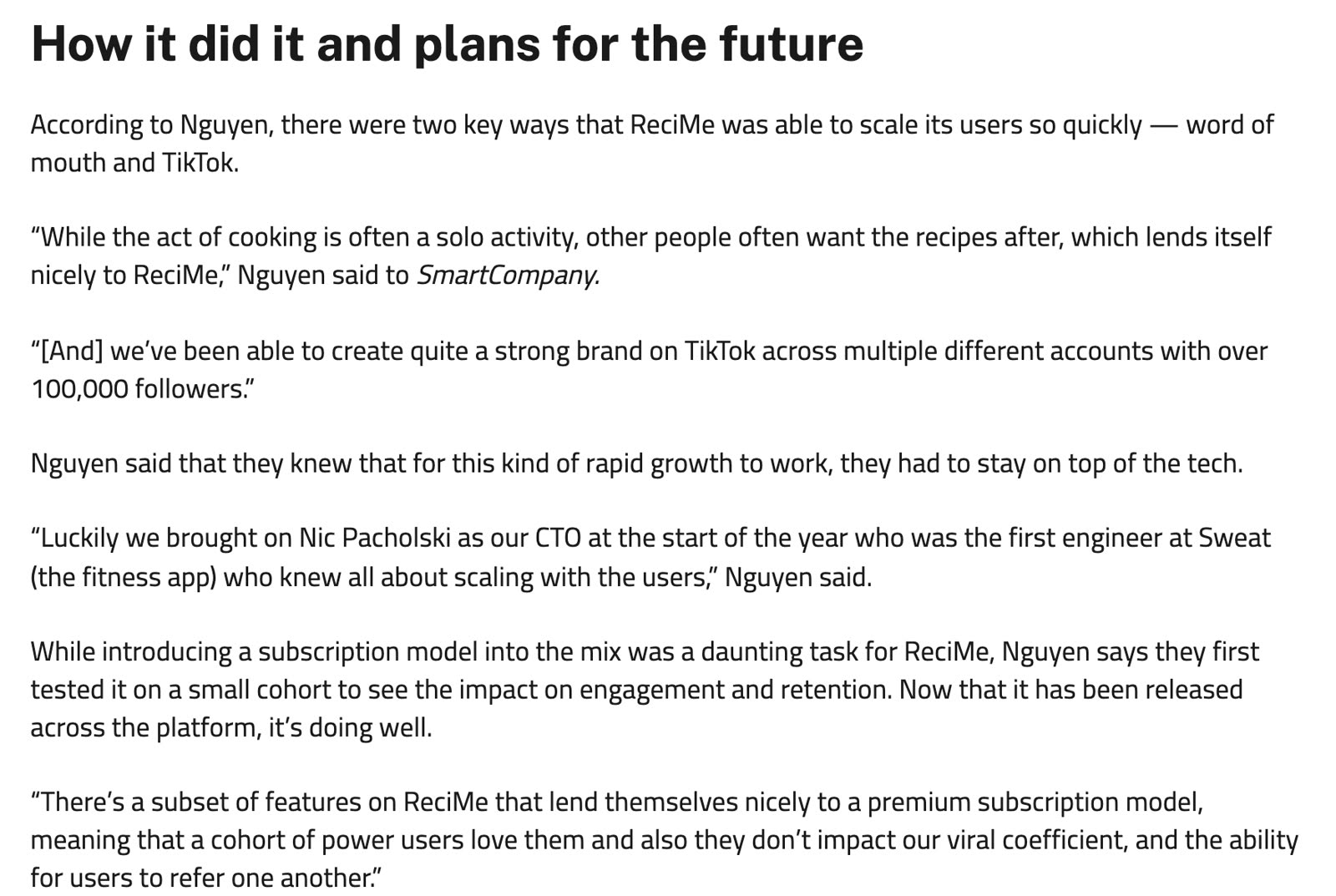
Here's the line that changes the shape of the story. Describing the TikTok presence, Nguyen said they'd built "quite a strong brand on TikTok across multiple different accounts with over 100,000 followers."
Multiple accounts. Not one flagship with 100K.
That's a different operation entirely, and once you've seen it you notice how often it's the actual mechanic behind "we grew on TikTok":
- Each account can serve a different angle — one for quick weeknight food, one for a specific cuisine, one that's just the founder talking. A single account has to pick a lane, and the lane caps the audience.
- The algorithm gets more shots. Ten posts a week from one account competes with itself. The same ten spread across four accounts get four separate cold-start attempts.
- A dead account costs you a quarter, not everything. Accounts get throttled, shadow-limited, occasionally banned for reasons nobody explains. Concentration is a real risk when your only channel is free traffic.
The tradeoff is boring and it's the reason most solo builders never do it: four accounts is four times the posting, four content calendars, four sets of captions, four times a day of opening the app.
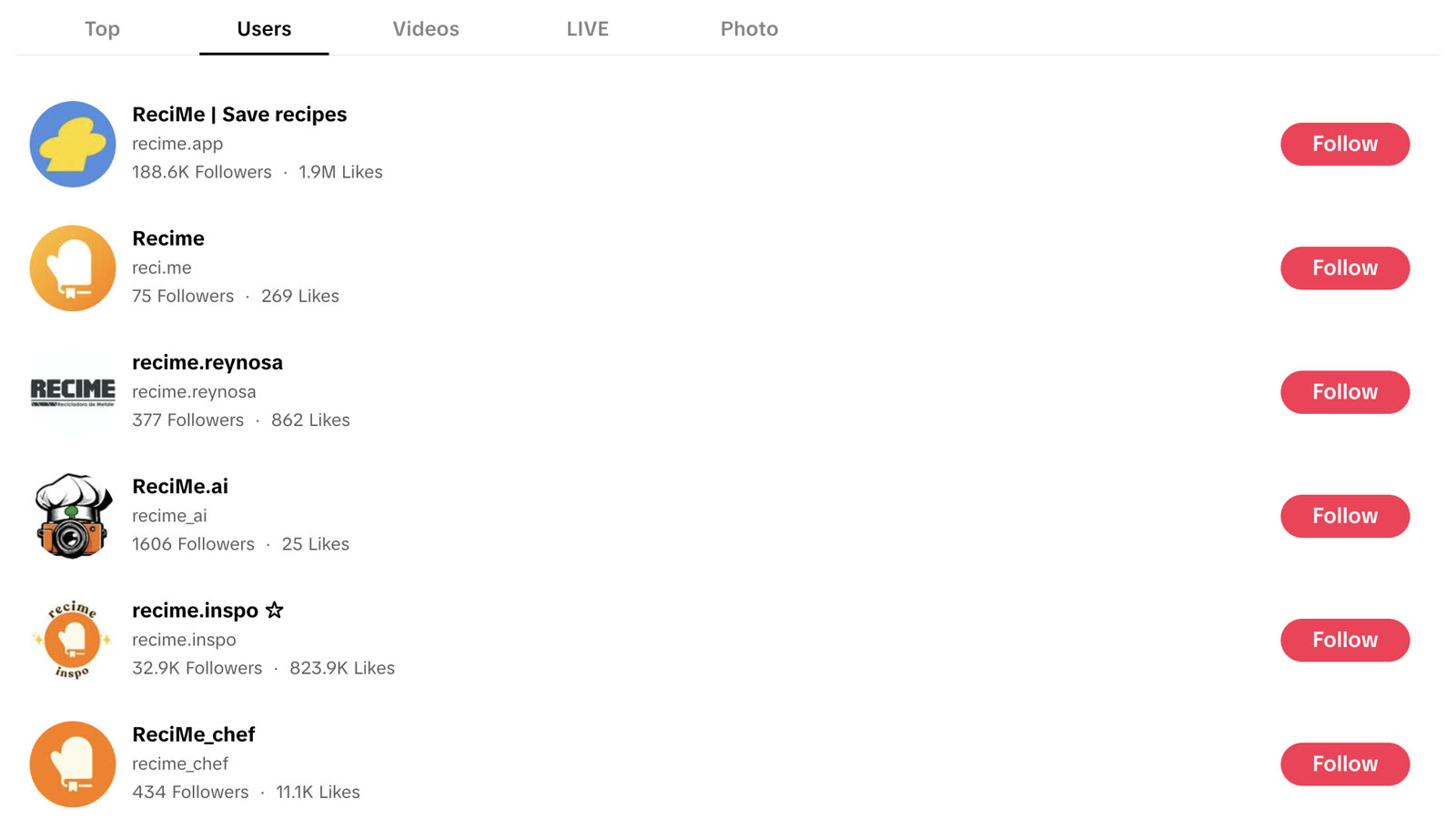
You can still see the portfolio. A public TikTok user search for "recime" on 12 September 2026 turns up four accounts carrying ReciMe's branding: the flagship @recime.app (188.6K followers, 1.9M likes), a themed satellite @recime.inspo (32.9K followers, 823.9K likes), and two small ones — @recime_chef (434 followers) and @reci.me (75) — that look like early experiments left standing. I haven't confirmed with the company which of these it operates; I'm going by the logo, the bios and the links.
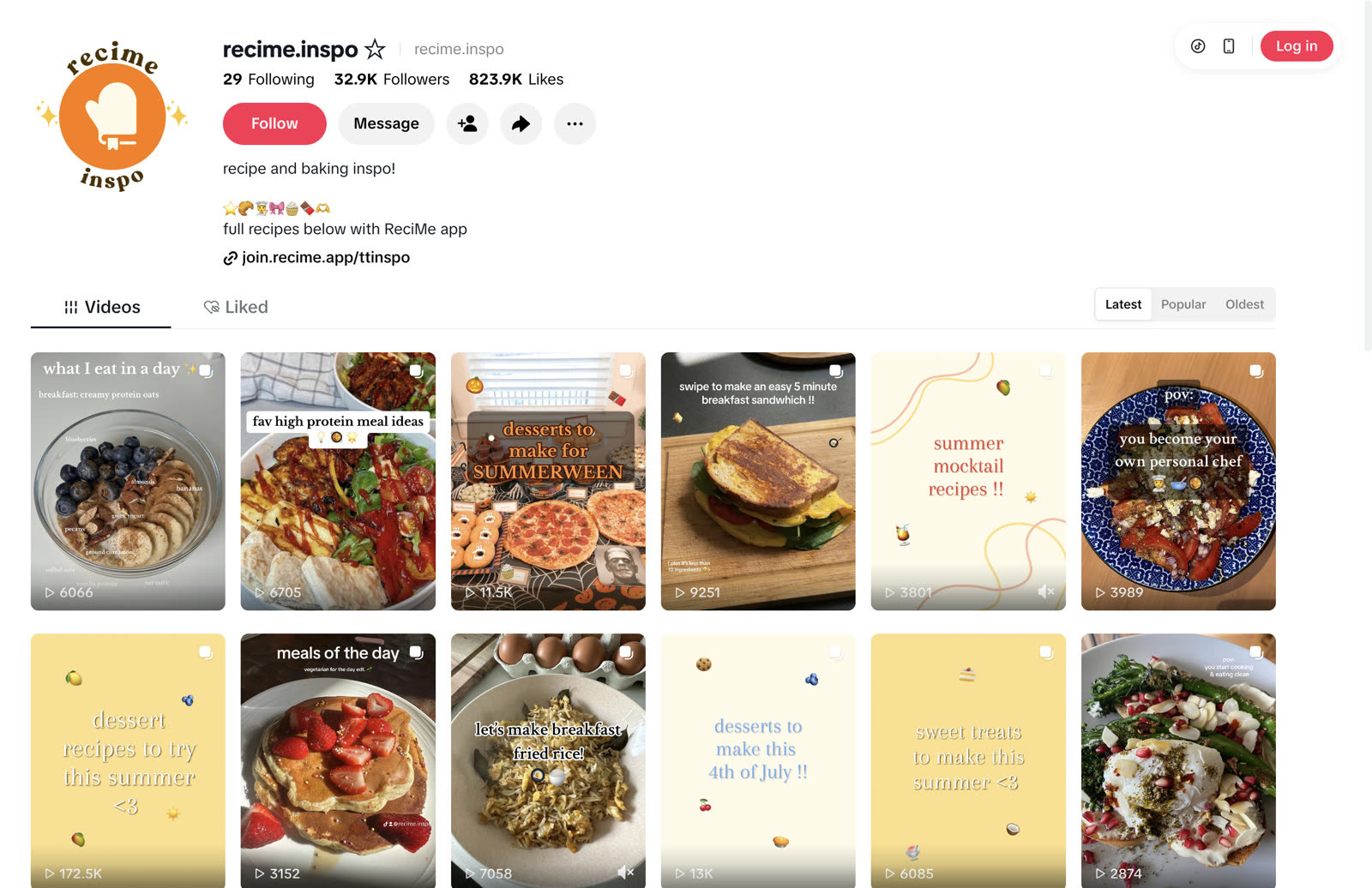
The satellite is the instructive one. Its bio links to join.recime.app/ttinspo — a tracked deep link with the account's own tag — and the grid is almost entirely text-on-photo idea posts: "dessert recipes to try this summer", "meals of the day", "fav high protein meal ideas". Views mostly in the low thousands, with the occasional 172.5K. That is a very different account from the flagship, where the founders cook on camera, and it's the kind of account that is cheap to feed.
That's the part that doesn't scale on willpower.
The mistake to fix before you post anything: too many features, none shareable
Every growth write-up skips this and it's the most useful section.
Before any of it worked, they had built too much. Nguyen was blunt about it to Startup Daily: they released the app with too many features, none of them working well, and once they figured out which one people actually loved — a smart importer that pulls a recipe in from an Instagram video, a blog, anywhere — they scrapped everything and rebuilt the whole app around driving that one action.
Retention tripled over the following six months.
Read that in the right order. The distribution didn't start working until the product had one obvious thing to do. Posting harder into a scattered app would have burned a year.
If you're a builder about to automate your posting, this is the question that comes first: is there one action in your app that a person would describe to a friend in a single sentence? If not, the posting isn't the bottleneck yet.
How to monetise an app without killing organic growth
The other genuinely clever bit, and it's a lifehack you can apply this week.
They launched a premium tier — and the reported figure at the end of 2023 was $60,000 in annual recurring revenue, small enough that most people would have skipped mentioning it. What matters is how they picked what to charge for. Nguyen described choosing features that a subset of power users love and that don't affect the viral coefficient or the ability of users to refer each other.
That's the whole trick. Most apps monetise by putting a wall in front of the exact action that spreads them, then wonder why growth stalls the quarter after launch. Paywall the depth, not the doorway.
They also tested the subscription on a small cohort first to see what it did to engagement and retention before rolling it out. Unglamorous, and it's why they still had a viral loop afterwards.
ReciMe's numbers: what's documented and what isn't
I want to be careful here, because this is where app-growth articles usually start lying.
What's documented: 20,000 → 400,000+ users during 2023. $60,000 ARR from the new premium tier as of December 2023. More than 500,000 users in the US by July 2024, 100,000+ recipes imported, and a $1.5M seed round. Retention tripled over six months. The founder also said the subscription brought a twentyfold increase in subscribers and revenue.
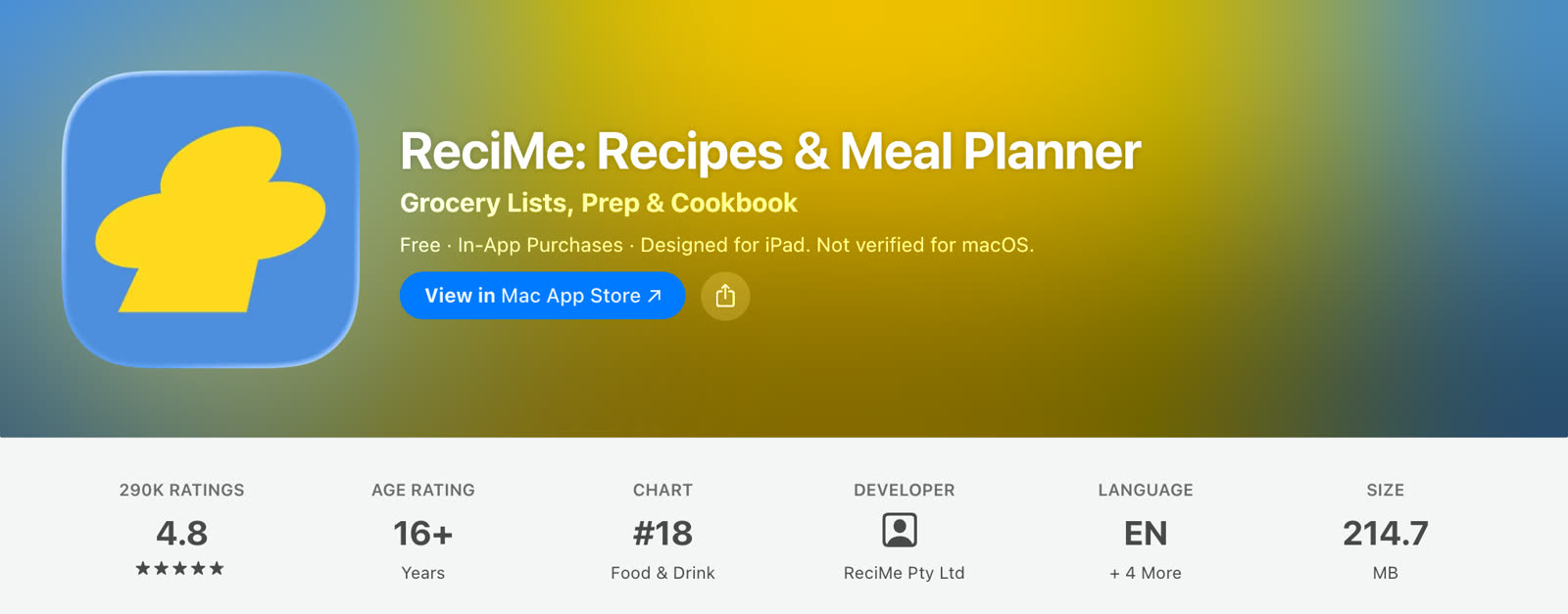
Two more that I checked myself on 12 September 2026, and that you can re-check in a minute: the US App Store listing shows 290K ratings at 4.8 stars and #18 in Food & Drink. The same listing says "Trusted by 15 million+ home cooks" — that is ReciMe's own marketing line, and I'm reporting it as one, not as a verified figure.
What I'm not going to do is multiply $60,000 by twenty and print the result as this company's revenue. The 20x was described in mid-2024 without a stated base, the $60K was a December 2023 figure, and putting them together would produce a number nobody actually reported. You'll see that multiplication in other write-ups of this same company. It's invented.
The reason to be pedantic about it: the mechanic is what you can copy, and the mechanic is fully documented. The revenue number is what makes a nice headline, and it isn't.
How to run 4 TikTok accounts for one app without losing your evenings
So the mechanic is a portfolio of accounts feeding one product with a shareable core. The obvious objection is that it's four times the work for one person.
This is where PosteAhora fits, and I'll keep it to what it actually does.
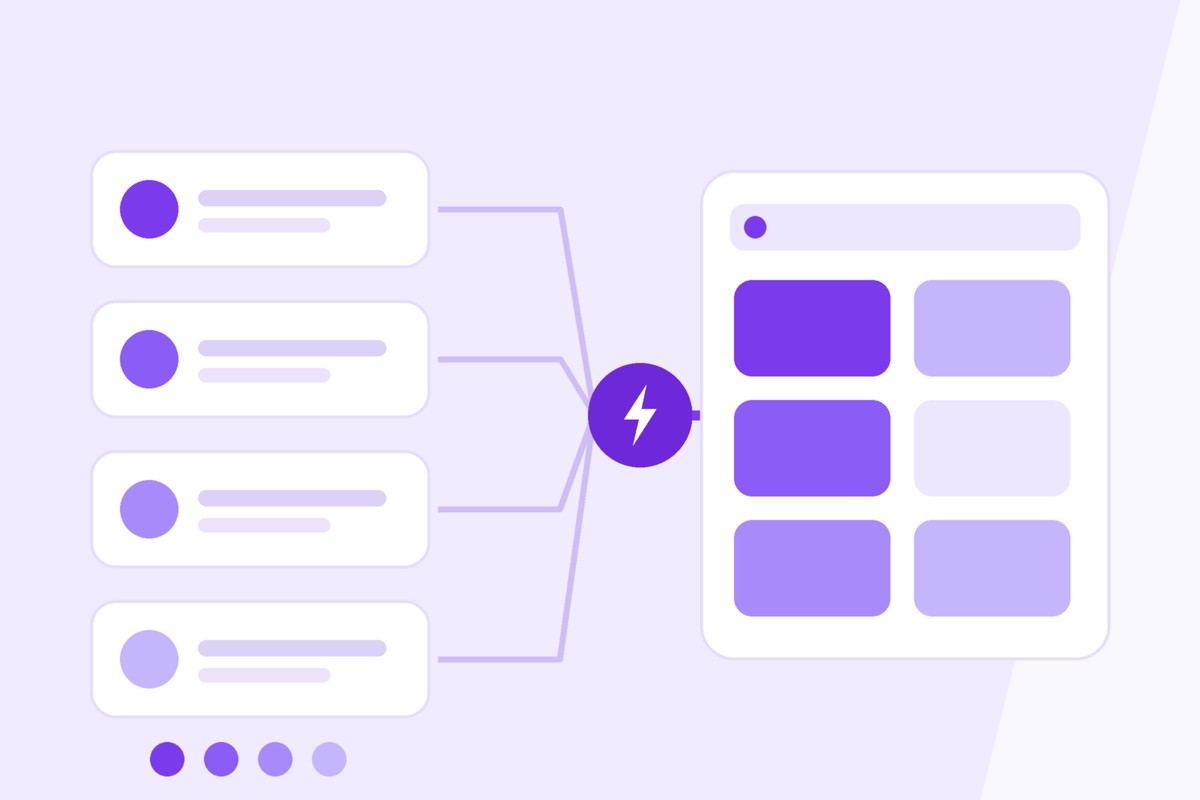
You connect each account once, and from then on a single queue feeds all of them — you're not logging in and out of four TikTok profiles at 11pm. Because there's an MCP server, an assistant like Claude or ChatGPT can do the mechanical part directly: it lists your connected accounts, uploads the media, and schedules the post into the queue, per account, with the caption adapted for each angle. Nothing publishes until you've looked at the queue.
Two limits worth knowing before you plan volume, both from the platforms themselves. A TikTok photo carousel takes up to 35 images, which makes slideshow content extremely cheap to produce at scale. An Instagram carousel is capped at 10 items through the API — 20 if you upload by hand in the app — and the whole carousel counts as one post against your daily limit.
What it doesn't do: make the video, find the trend, or write a hook that works. That's still you.
How to start growing an app on TikTok without ads: 4 steps, in order
In this order, and not all at once.
One. Find the single action in your app somebody would describe to a friend. If you can't name it, stop here — that's the work.
Two. Start with two accounts, not four and not one. Two is enough to learn whether angle-splitting does anything for you, and it's still survivable by hand.
Three. Only once two accounts are boring should you automate the queue and add more. Automating a thing that isn't working yet just gets you more of nothing, faster.
Four. Decide what you'd paywall before you need the money — and check that it isn't the thing that makes people share.
The uncomfortable summary is that ReciMe's TikTok strategy worked because the product underneath it had been rebuilt to deserve it. Distribution amplifies. It doesn't rescue.
Running more than one account and feeling it? Connect them in PosteAhora and let one queue — or an AI agent with access to it — handle the posting while you keep the judgment. Free trial, cancel whenever.
FAQ
Can you really grow an app without paying for ads?
Yes, and ReciMe is a documented case: from 20,000 to more than 400,000 users during 2023, attributed by its co-founder to word of mouth and TikTok rather than paid acquisition. What that requires is a product with a natural reason to be mentioned to another person, plus sustained organic posting. It's cheaper than ads in money and considerably more expensive in time, which is the tradeoff nobody puts in the headline.
Should I run one TikTok account for my app or several?
Several, once you can sustain them. ReciMe's presence was spread across multiple accounts totalling over 100,000 followers rather than concentrated in one. Multiple accounts let you test different angles, give the algorithm separate cold starts instead of making your posts compete with each other, and mean a throttled or banned account costs you a fraction rather than everything. Start with two — four accounts posted badly is worse than one posted well.
How many images can I put in a TikTok or Instagram carousel?
TikTok photo carousels support up to 35 images. Instagram allows up to 20 when you upload by hand in the app, but only 10 through the API, which is what any scheduling tool or agent uses — and the whole carousel counts as a single post against your account's publishing limit. If you plan to automate, brief your designer or your generator for 10 slides maximum.
What's the biggest mistake app founders make with organic growth?
Posting before the product has one clear, shareable action. ReciMe's founder described releasing an app with too many features, none working well, then scrapping it and rebuilding around the single most-loved one — after which retention tripled. Distribution amplifies whatever is underneath it. If the underneath is unfocused, more reach mostly produces more people bouncing.
How do I monetise without killing organic growth?
Paywall depth, not the doorway. ReciMe chose premium features that a subset of power users valued and that specifically did not affect the viral coefficient or users' ability to refer one another, and tested the subscription on a small cohort before rolling it out. The common failure is charging for the exact action that spreads the app, which converts a few users and quietly turns off the growth engine.
Can an AI agent post to several accounts for me?
Yes, through the publishing tool's API rather than by touching your accounts directly. With an MCP connection, an assistant can list your connected accounts, upload media, and schedule a post per account with the caption adapted for each — using the same permissions and rate limits you already granted, with everything landing in a queue you review before it goes out. It handles the mechanical repetition; the hook and the video are still yours.